Sausage Casings Explained: Natural to Fibrous
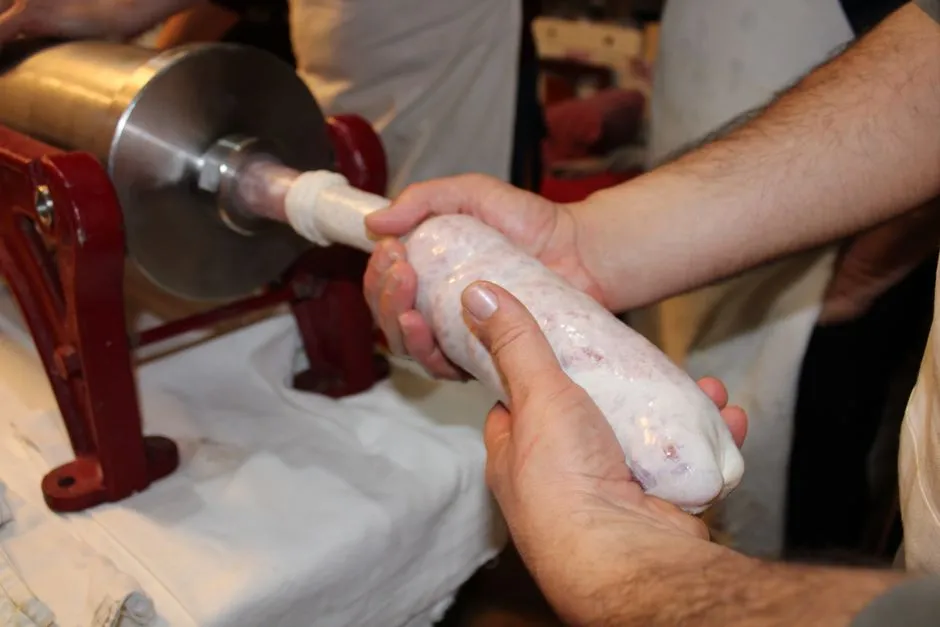
Choose the casing by the sausage, not by a ranking
The main types of sausage casings are natural, collagen, cellulose, and fibrous. For fresh links at home, natural hog or sheep casing gives the traditional curved shape and bite, while edible collagen gives a straighter, more uniform link with less preparation. Cellulose and fibrous casings are generally inedible processing tools for skinless, cooked, smoked, or dried products, not automatic substitutes for an edible fresh-sausage casing.
The useful question is not "Which casing is best?" It is "Which casing fits this recipe, diameter, cooking method, equipment, and desired bite?" A breakfast link and a large slicing sausage ask very different things of the tube holding them together.
| What you are making | Sensible first category | Why | Check before buying |
|---|---|---|---|
| Slim fresh breakfast links | Sheep casing or small edible collagen | Narrow diameter; natural offers a traditional bite, collagen offers uniformity | Exact millimetre size, horn fit, edible status |
| Bratwurst or Italian-style fresh links | Hog casing or fresh-sausage edible collagen | Common medium diameter with room for a coarser mixture | Recipe size, pack capacity, preparation directions |
| Skinless cooked links | Cellulose designed for that process | Holds the shape during processing, then peels away | Explicit peel/removal instructions and process suitability |
| Large cooked, smoked, or dried sausage | Fibrous or another purpose-made large casing | Strong, uniform support for a specific controlled process | Whether it is edible, smoke-permeable, pre-stuck, and approved for the recipe |
This publication covers fresh, uncured sausage. Fermentation, curing, preservation smoking, and shelf-stable dried sausage need validated formulas, controlled temperature and humidity, and specialist guidance. Buying a fibrous casing does not turn a fresh mixture into a shelf-stable product.
What is a natural sausage casing?
Natural casings come from processed parts of the digestive tract of food animals. The UN Food and Agriculture Organization's casing reference describes hog, sheep, and cattle casings and explains that prepared intestinal layers are cleaned, graded, and preserved before use.
For a home batch, the important distinctions are species and calibre:
- Sheep casings are narrow and suit slender fresh links. FAO lists common bands from 16-18 mm through 25 mm and wider, with 20-22 mm and 22-24 mm among the standard grades.
- Hog casings cover the familiar medium fresh-sausage territory. FAO grades pig casings from 28 mm and under through 42 mm and over; 32-35 mm is a common medium band.
- Beef casings include larger formats used for particular ring, cooked, or large-diameter sausages. They are not the default answer for a first batch of ordinary fresh links.
Natural casing is not perfectly cylindrical. Diameter, curve, wall thickness, and strand length vary. That variation creates the handmade appearance many cooks want, but it also asks for patience while loading and stuffing. Salted natural casings normally need rinsing and soaking according to their supplier's directions. Inspect them as you work, and cut away a damaged section rather than trying to force a tear through the stuffer.
Choose natural casing when the characteristic bite and appearance matter more than identical link dimensions. Confirm the animal species before buying if religious, allergy-related, ethical, or dietary requirements affect the household. The meat inside and the animal source of the casing are separate facts.
What is a collagen casing?
Collagen casings are manufactured from animal collagen, generally derived from hides. They are produced to a consistent diameter, so links tend to be straighter and more even than links in natural casing. They also arrive in forms designed for particular uses, including fresh links and processed sausage.
"Collagen" does not automatically mean edible. The FAO reference states that regenerated collagen casings may be edible or inedible and that inedible versions must be removed. Read the product description and package rather than relying on appearance. A fresh-sausage edible collagen casing and a thick inedible collagen casing for another process are not interchangeable merely because both share the material name.
Edible collagen is appealing when repeatable diameter, quick loading, and neat portions matter. It can be less forgiving of twisting or overfilling than a cook expects, and different product lines have different preparation and linking instructions. Some are used dry; some manufacturers specify other handling. Follow the exact casing label instead of borrowing a soak routine from natural hog casing.
Choose edible collagen for a fresh batch when uniformity and a simpler setup outrank the irregular curve and bite of natural casing. Verify animal source when that matters, and confirm that the pack is specifically intended for the recipe's fresh cooking method.
What are cellulose and fibrous casings?
Cellulose casing is an artificial, generally inedible casing used to shape a sausage during processing. Small cellulose casings are associated with skinless links: the casing holds the product during cooking or smoking and is peeled before sale or eating. FAO says small-diameter cellulose casing should be peeled from the finished product.
Fibrous casing is cellulose reinforced with fibres for greater strength. It is familiar around larger slicing sausages and some semi-dry or dry products. Its surface can be printed, clipped, or tied, and different versions vary in moisture and smoke permeability. It is usually removed rather than eaten.
These casings solve processing problems, not first-batch indecision. A fresh-sausage recipe written for 32-35 mm hog casing should not be moved into a large fibrous casing without a validated method for the new diameter and process. A thicker sausage heats differently, and a cured or dried product has safety controls beyond casing choice.
For any cellulose, fibrous, or plastic casing, look for the manufacturer's named application, edible or inedible status, preparation directions, closure method, diameter, and cooking or smoking limits. If the pack does not make the intended use clear, it is the wrong pack to improvise with.
How do sausage casing sizes work?
Casing calibre is the diameter, usually stated in millimetres. A natural casing labelled 32/35 mm has been sorted into an approximate 32-to-35 mm diameter band. The range reflects natural variation; it is not the link length. A casing seller's pack may separately state total length, number of strands, or the approximate weight of sausage it can hold.
The size changes more than appearance. A larger diameter holds more mixture per unit of length, produces a thicker portion, and requires a different cooking expectation. A smaller diameter makes slimmer links but can be awkward if the grind is coarse, the horn is too large, or the casing is filled too aggressively.
Useful starting points, not universal laws:
- 20-22 mm or 22-24 mm sheep casing: slim breakfast-style links and chipolata-scale sausage.
- Around 30-32 mm hog casing: many standard fresh links.
- 32-35 mm hog casing: a common bratwurst and medium fresh-sausage size. A University of Wisconsin Extension compilation, drawing on an extension meat specialist's formula, specifies 32-35 mm hog casing for bratwurst.
- Larger than 35 mm: thicker links, rings, or specialty products where the recipe and cooking method explicitly call for them.
Those are category examples. Suppliers do not all grade or fill in precisely the same way. A current manufacturer sizing explanation notes that the band reflects natural variation and advises matching diameter to the product and process. Use the recipe's casing specification first, then check the supplier's actual sizing chart.
Do not buy by millimetres alone. Check whether your smallest stuffing horn can accept the casing without stretching it excessively and whether the casing can slide freely during stuffing. The equipment manual and casing supplier should agree on a workable combination.
Natural or collagen: which is better for fresh sausage?
Neither wins every category.
| Criterion | Natural casing | Edible collagen casing |
|---|---|---|
| Shape | Curved and variable | Straighter and more uniform |
| Preparation | Commonly rinsed and soaked as directed | Often less preparation, but label directions vary |
| Stuffing feel | Supple, with natural weak spots and variation | Consistent, but may split if twisted or filled contrary to its design |
| Bite | Traditional snap and chew vary by species and size | More standardized; texture varies by product line |
| Sizing | Calibrated in a range | Manufactured to a nominal diameter |
| Best reason to choose | You want traditional appearance and eating texture | You want repeatable portions and a quicker setup |
For a first medium fresh-sausage batch, 32-35 mm hog casing is a forgiving, widely understood reference point when the recipe calls for it. Edible collagen in the recipe's specified diameter is a reasonable alternative when uniformity matters. For slender links, sheep casing offers the natural option, while a purpose-made small edible collagen casing offers the uniform one.
If you have never filled either, buy a small pack and make one recipe twice before buying a full hank. Keep the mixture, diameter, link length, and cooking method the same; change only the casing. Compare loading, breakage, cooked bite, and portion size. That test answers more than a generic ranking can.
Read the package before paying
A useful listing or label should answer all of these:
- Material and source: natural sheep, natural hog, edible collagen, cellulose, fibrous, or another clearly named material.
- Edible status: stated directly, especially for collagen and manufactured casings.
- Calibre: the diameter or diameter band in millimetres.
- Intended product: fresh links, skinless cooked links, large cooked sausage, or another defined use.
- Preparation: rinse, soak, use dry, or follow another stated procedure.
- Pack quantity: usable length, strands, or approximate stuffing capacity, with units.
- Storage: unopened and opened storage instructions plus a use-by or best-before date where supplied.
- Equipment fit: compatible horn range and closure or linking method.
Buy from a butcher who can identify the casing, a specialist sausage supplier, or a manufacturer with a complete technical description. A marketplace title that says only "sausage skins" has not supplied enough information.
Match the casing to safe cooking
A casing holds the mixture; it does not prove that the centre is cooked. Colour, firmness, or a browned skin cannot replace a thermometer reading. FoodSafety.gov's current chart lists 160°F (71°C) for ground meat and sausage and 165°F (74°C) for chicken, turkey, other poultry, and poultry sausage.
Use a food thermometer in the centre of a representative link and follow the recipe and appliance instructions. Our fresh-sausage cooking guide covers pan, oven, and grill methods without treating casing colour as a doneness test.
Keep raw sausage refrigerated, prevent its juices from contacting ready-to-eat food, and clean hands, tools, and surfaces after raw-meat contact. Follow the product label for storage and use our fresh-sausage storage guide for fridge, freezer, and thawing decisions.
Once the casing is chosen, load and fill it with the stuffing guide. The calm sequence is simple: match the recipe, material, calibre, and equipment before the meat comes out of the refrigerator. Casing choice should be settled while the kitchen is still clean and the mixture is still cold.