Why Do Sausage Casings Split When Cooking?
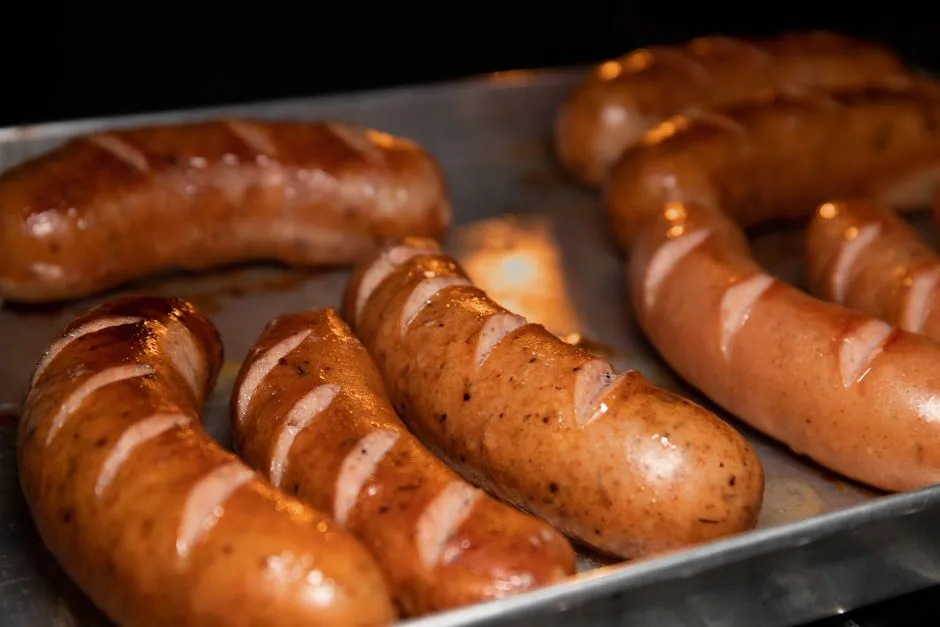
- Why do sausage casings split when cooking?
- What happened before the casing opened?
- Can excessive heat cause the split?
- Could the casing already have been damaged?
- What about tight filling and air pockets?
- Does casing type change the preparation?
- Should you prick sausages to prevent bursting?
- What should you do with the split sausage now?
- What should you change for the next batch?
- Sources
Why do sausage casings split when cooking?
Excessive cooking heat, overfilling and casing damage can contribute to split sausages. Check whether the tear existed before cooking, appeared during turning or developed over heat. Follow the product's cooking directions and verify the centre with a thermometer: fresh pork, beef, lamb or veal sausage needs 160°F; poultry sausage needs 165°F. A split does not establish doneness.
This is a troubleshooting guide for fresh, uncured links, using U.S. food-safety endpoints. It is desk research, not a tested recipe or a curing, fermentation or preservation-smoking method. Those processes need validated specialist guidance.
What happened before the casing opened?
Start with the sequence, not the finished photograph. A torn cooked link rarely supplies enough evidence to identify one cause. Use this observation table to choose what to investigate; it cannot certify a diagnosis.
| What you observed | What to review first | Useful evidence to keep |
|---|---|---|
| A tear was visible on the raw link | Preparation and filling | Where it appeared: loading, filling or linking |
| The casing opened while you turned it | Handling at that moment | Whether a utensil pierced or gripped that spot |
| Links opened while left over heat | Cooking instructions and heat setting | Appliance, setting, turning pattern and centre readings |
| The same purchased product repeatedly fails | Product-specific advice | Package, lot details, photos and your actual method |
Write down what you know and leave the rest blank. “Split on the first turn” is more useful than “bad casings.” It points to a moment you can inspect next time without inventing a manufacturing fault.
Can excessive heat cause the split?
Johnsonville's product FAQ identifies excessive grilling temperature as a reason its fresh Italian sausage and brat casings burst. The company directs cooks to the instructions on the specific package or product page.
Follow the packet's heat and method. Record your actual setting and any departure from those directions; restore the prescribed method before changing the sausage.
“Lower heat” must never mean serving an undercooked centre. The endpoint remains mandatory. A timer cannot establish safety.
Could the casing already have been damaged?
The LEM dual-gear stuffer manual lists several causes of bursting during filling: brittle casings, incorrect soaking, excessive filling, an oversized stuffing tube and a burr that punctures the casing. It also warns that overfilled casings can burst during twisting.
For homemade links, check where trouble first appeared. Stop the equipment before inspection and follow its manual; keep hands away from moving parts and route damaged components to the manufacturer. More force is not a repair.
Review the stuffing sequence if breaks began before cooking. With shop-bought links, ask the producer about repeated defects rather than assuming you can reconstruct its production process from a torn skin.
What about tight filling and air pockets?
In its bratwurst-making instructions, ThermoWorks distinguishes a firm fill from a tight one. It says overfilling makes linking difficult and increases bursting during cooking. Its filling sequence also avoids tying off an empty end before meat arrives, which would trap an initial bubble.
For your next homemade batch, compare the filled rope with the casing supplier's stated capacity and the equipment instructions. Note visible bubbles before linking. This is a preparation check; it is not a reason to squeeze or puncture a hot sausage. The cited stuffing guidance does not replace the cooking endpoints here.
Does casing type change the preparation?
Yes. LEM's collagen guide distinguishes edible and non-edible products and says its edible collagen casings need no soaking. It also cautions against excessive twisting and filling beyond capacity. Do not transfer that instruction to every manufacturer's casing.
Natural casing has a different preparation routine. UConn Extension describes rinsing, separating, flushing and keeping prepared natural casings from drying before use. Follow the actual supplier's directions for the packet you bought; adding extra soaking time is not automatically an improvement.
Keep the casing label beside the recipe when reviewing a failed batch. Record material, size and preparation, not just “sausage skin.” Our casing comparison helps identify the material before you change it. A different casing is a deliberate recipe-and-equipment decision, not a universal cure for splitting.
Should you prick sausages to prevent bursting?
For ordinary cooking of intact fresh links, our editorial choice is to leave the casing intact unless the product directs otherwise. The New Zealand Casings Company explains that punctures let juices escape. That is the narrow point used here; follow the U.S. endpoints below, not that page's lower removal temperature or counter-warming advice.
Culinary sources differ on pricking. Targeted preparation of a visible bubble and routine fork holes throughout a cooking sausage are different decisions. Do not improvise a hot-link repair. Record whether you pierced the casing so the next comparison is meaningful.
What should you do with the split sausage now?
Continue cooking safely and check the meat itself. FoodSafety.gov lists these minimum internal temperatures:
- Fresh pork, beef, lamb or veal sausage: 160°F (71°C).
- Fresh poultry sausage: 165°F (74°C).
A torn casing does not lower either requirement. Measure the thickest part with a food thermometer. Do not substitute a reading from the pan, escaped fat or browned surface. Follow the thermometer's insertion instructions.
Use clean serving utensils and a clean plate. Wash hands and food-contact equipment after raw-meat contact. FoodSafety.gov's handling guidance calls for refrigeration at 40°F or below, prompt chilling of leftovers and separation of raw and cooked foods. Do not leave raw links on the counter as an anti-splitting experiment; thaw them in the refrigerator.
What should you change for the next batch?
Choose one documented variable. Keep the rest of the recipe, casing and approved cooking method consistent. This is an editorial troubleshooting worksheet, not a promised test result:
- Record the starting point: product or recipe, casing packet, appliance and instructions followed.
- Name the observation: when the opening appeared and what you were doing.
- Choose the relevant correction: return to package directions, correct documented casing preparation or resolve a confirmed equipment defect.
- Record the outcome: whether it split again and whether the measured centre reached its required endpoint.
Do not change filling, casing, seasoning and cooking method together and then attribute the result to one of them. If the label or method is unclear, ask the producer or casing supplier. If you prefer to avoid casing work altogether, patties and other casing-free forms are a separate option.